Getting started or advancing in adult content depends a lot on the technology you use. Many creators start out with a smartphone, and that’s perfectly fine (that’s what most people do at the beginning). At some point, however, you realize that it’s no longer enough. Fans often pay for quality, and at the same time you want to have less stress during production, not more (nobody wants to fiddle around all the time). That’s why a good camera is often the decisive step for OnlyFans to appear more professional. A clean image often helps with this, without any extra effort, and this is precisely what is often underestimated.
What’s exciting is how much expectations have changed. This is exactly where the right camera for OnlyFans comes into play. In 2026, expectations are higher than ever before, no question about it (everything is faster). For many, 4K is now standard. The autofocus should be secure, even when you’re moving. Low light is often important, especially in the evening. And the camera has to run reliably, whether live or during longer recordings, i.e. for live or long sessions (usually late).
In this article, I’ll show you the top 5 cameras for adult content in 2026 – without any technical blah-blah or manufacturer advertising, but with real comparisons for creators like you (exactly what’s often missing). That’s how it should be. The requirements are often similar, whether it’s OnlyFans or webcam clips for multiple platforms.
We take a look at which camera suits which creator. From beginners to advanced and full-time models, everything is included (yes, really). There are also tips from the field. It also becomes clear why technology alone is usually not enough if workflow and strategy are missing. For me, that’s the point. The rest comes later.
Why the right camera for OnlyFans determines your income
Many people underestimate how much the camera really influences sales. This is demonstrated time and again in practice. Platform data makes it easy to understand: High-quality content often sells better in this environment. According to Infloww, 1080p is now considered the minimum standard, while many premium creators work with 4K. This has a particular impact on pay-per-view messages: longer watch time, better conversion and often more tips. In most cases, this effect is clearly noticeable and not just gray theory.
The market is also moving in precisely this direction. Figures help to put things in perspective. The global market for mirrorless cameras was USD 5.33 billion in 2024 and is expected to exceed USD 9 billion by 2033. This fits in with creator content, social video and direct fan monetization, which are strongly driving this trend.
Mirrorless cameras are popular because they are small and deliver powerful video without a lot of setup. This is ideal for solo creators who film, edit and post on multiple platforms. Too much technology usually slows you down here.
Mirrorless cameras are the best choice for modern content creators due to their compact design, advanced autofocus, and superior video capabilities, which continue to drive adoption across creator-driven industries.
SkyQuest Technology Research Team, SkyQuest Technology Tweet
Another point is the workflow, which is often underestimated. Good cameras save time: less post-processing, fewer repetitions and more content from one session. As a result, this often leads to more uploads per week and ultimately to a measurably higher monthly income.
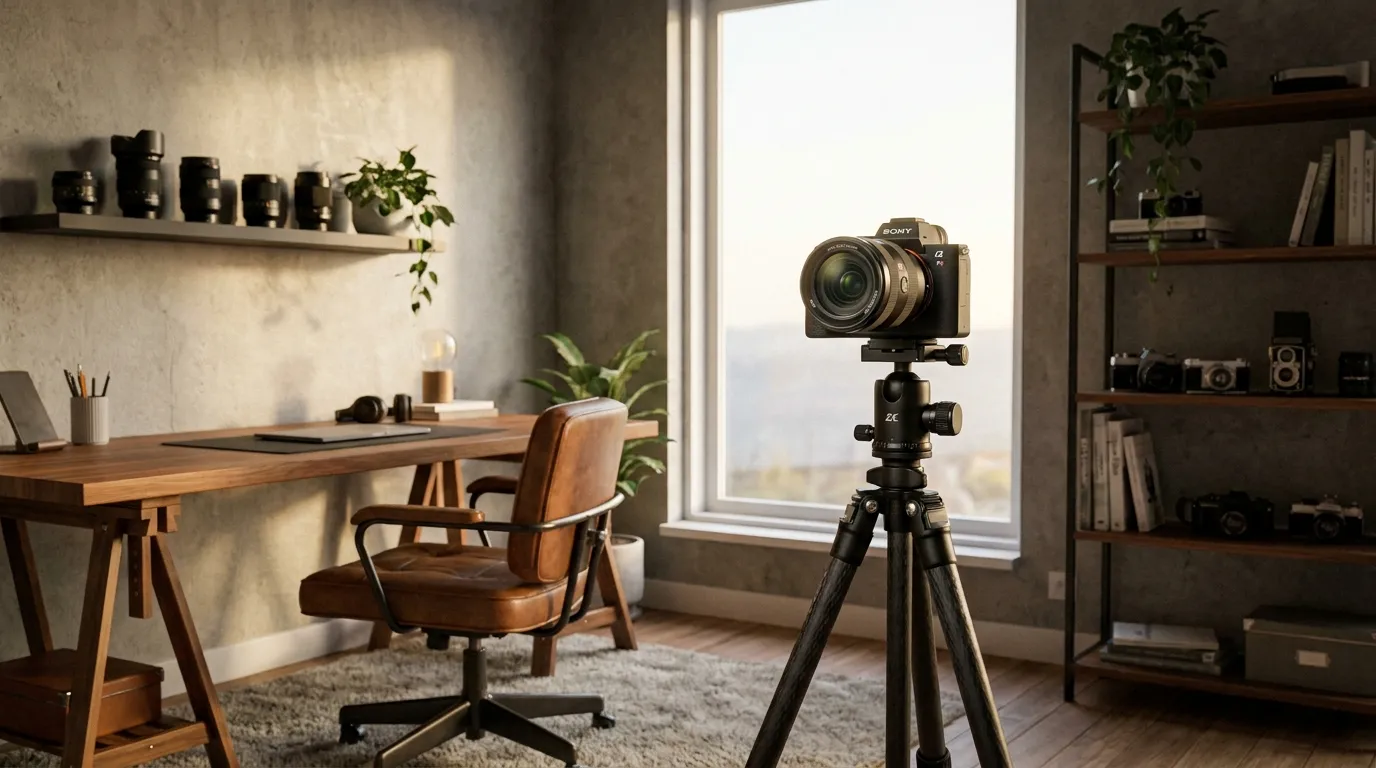
Sony A7 IV, The safe professional standard
The most exciting aspect of the Sony A7 IV for many creators is this clear sweet spot. Full-frame quality meets very reliable autofocus and strong low-light performance, which you quickly notice in everyday life, especially in the evening. This is really helpful in small bedroom or studio setups with little space and limited light. You can see the difference quickly, usually without much adjustment or stress.
In addition, the autofocus recognizes eyes and faces very reliably, even in motion, and remains clean. This is great for solo shoots without a cameraman if you are doing everything on your own. The colors look natural and skin tones remain pleasant. There is also 4K with up to 60 fps, which is practical for slow motion, reels and short teasers. Pretty flexible overall.
The Sony A7 IV hits a sweet spot for creators who need excellent autofocus, strong low-light performance, and dependable video quality without stepping into cinema-camera pricing.
Spencer Cox, Photography Life Tweet
Panasonic Lumix GH7, the video machine for long sessions
When video is clearly the focus, the GH7 delivers exactly what you expect in most cases. Panasonic is known for stable video functions, and this is quickly apparent here. Long recording times usually work without noticeable overheating. In addition, there are very powerful internal codecs, which bring real advantages in editing and color correction, especially when a lot of tweaking or re-grading is required.
I think this is often crucial, especially for live streams and long clips, including customs. The image stabilization is really good and takes out a lot of stress, especially when shooting by hand. This saves gimbal and nerves. The GH7 feels like a real workhorse and remains reliable even during long sessions.
Panasonic's GH-series remains one of the most creator-friendly platforms for video-first users thanks to internal codecs, stabilization, and thermal reliability.
Jordan Drake, DPReview Tweet
The autofocus has been significantly improved, no question. However, it is usually still somewhat below the Sony level. Nevertheless, the camera gives you a lot of control over the image, which I think experienced video creators often appreciate.
Sony ZV-E10 II, the perfect entry into the professional level for OnlyFans
Not everyone wants Full Frame right away, and that’s perfectly okay (really). The Sony ZV-E10 II is aimed at creators who want to upgrade from a smartphone without overextending themselves. It’s lightweight, fairly priced and still delivers decent performance. With good APS-C lenses, it shows its strengths both outdoors and indoors, which you quickly notice. This makes it a good fit for the step from hobby to more demanding use.
The fast, reliable autofocus is striking, especially for faces. The camera is clearly made for creators and remains pleasantly simple in everyday use, without constant clicking around. Flip screen, USB-C streaming, solid audio connection and an editing workflow without brakes are all part of the package. For TikTok clips and OnlyFans, it is a very good fit, often even better than more expensive models, and without the stress of learning.
Many agencies recommend it as the first real camera for OnlyFans, above all because it is forgiving of mistakes. It grows with you when light, lenses or an external microphone are added later.
Gerald Undone says that creators today are more interested in good autofocus and dynamic range than in an extremely large number of megapixels, and that fits well here.
Canon EOS R8, Full Frame without unnecessary ballast
The Canon EOS R8 offers Full Frame at a fair price, I think, and this is particularly evident on the move. It is light and compact and fits comfortably in a rucksack, which is often more important than an extra on the spec sheet. Anyone filming with few accessories will quickly realize that the sharp 4K videos are completely sufficient in most situations. The dual pixel autofocus is one of the best on the market and usually remains reliable on faces, even if the subject is moving.
Skin tones often look very natural, which many people appreciate because the look is quickly right. This saves time in post-processing. The camera is also aimed at creators who like simple technology but expect solid image quality. One clear disadvantage is the battery life: for longer shoots you need spare batteries or continuous power. The menu is clearly laid out, and for me Canon often stands for reliability in continuous use.
Nikon Z6 III, strong in low light and dynamic range
You don’t see the Nikon Z6 III on every corner, which often helps here (at least I think so). What is particularly interesting is how reliably it works with low light. Especially in darker environments, images usually remain calm and clean, which is immediately noticeable. Even at higher ISOs, the noise remains pleasantly low, and that’s where it usually feels really comfortable.
In my opinion, it is particularly suitable for sensual, slightly darker sets, especially in the evening. The color depth is quickly convincing and looks harmonious. It feels high-quality in the hand, stable enough for mobile setups or longer sessions on the go, without being unnecessarily heavy. Nikon has clearly caught up in terms of autofocus: For Solo Creator, it often works reliably, usually without constant readjustment.
Technical comparison of the top 5 cameras
The most exciting part first: How well a camera fits into your workflow is often decided faster than pure specs. That’s why we provide a brief and clear comparison of the most important points. This way, you can immediately see what suits your content style and on which platform everything runs reliably. Technology alone is usually not enough, it’s also about your goals and how much time you really want to invest. In the end, it should remain simple.
| Camera | Sensor | video | Especially strong for |
|---|---|---|---|
| Sony A7 IV | Full Frame | 4K 60fps | Allround Creator |
| Panasonic GH7 | Micro Four Thirds | 4K 60fps | Long videos |
| Sony ZV-E10 II | APS-C | 4K 30fps | Beginner |
| Canon EOS R8 | Full Frame | 4K 60fps | Natural skin tones |
| Nikon Z6 III | Full Frame | 4K 60fps | Low Light |
Camera is only part of your success
Many creators spend thousands of euros on technology and still end up earning less than they could. Sounds familiar (often yes). In most cases, this is not due to the camera, but to a lack of planning. Window light or a softbox from the left, a clear niche, clean pricing per set and a weekly content plan often bring more than a few extra pixels in practice. To be honest, this surprises many people, at least at the beginning.
Because even a good camera is of little use if you don’t use it properly (happens to many). Things get interesting when one shoot becomes ten products instead of just one: through different outfits, angles and cuts. This is exactly where efficiency is created, which is often seen as more sales at the end of the month.
Professional management structures also come into play. Agencies such as Ero-Manager bring technology, workflows and marketing together in a sensible way, with clear processes, content feedback and help with sales, without drama. Successful creators think like entrepreneurs. The camera remains important. Not anymore (and that’s okay).
Now it's your turn
2026 is a strong year for adult content creators. The technology is better than ever and demand remains high, which is often quickly apparent. At the same time, competition is clearly noticeable and usually tougher than before. Quality alone is often no longer enough. The entry price is often the deciding factor, and that’s exactly what many are feeling right now.
Which camera is right for you depends heavily on your everyday life. Energy throughout the day, available time and clear goals are often underestimated. A Sony A7 IV can be a good fit. In many cases, however, a ZV-E10 II is also sufficient if the concept is clear and it is clear what is to be shown. That is often the crux of the matter.
After all, the best thing to do is to simply get started. Starting, testing and adapting helps. Processes grow over time and it’s worth getting help. Step by step, a fixed rhythm is established, for example one evening of filming per week.